Talking about Art in English


Going to a gallery
permanent collectionthe works of art which are always on display in a gallery
temporary exhibitiona group of artworks shown together for a fixed period
stage/hold an exhibitiondisplay a group of artworks to the public
blockbustera very popular exhibition of work by a well-known artist or artists
openingan event at which people can see an exhibition for the first time
new acquisitiona work of art that the gallery has bought recently
piecesworks of art

 Most cities and large towns have a ____________ that is funded by the government. Public galleries generally have a _________________ (which may be free) and also _____________ (which usually have an entrance fee). Large public galleries, such as the Tate Modern in London, ____________at least one _______________exhibition each year. If you are a member of the gallery, you may be invited to attend an __________. You might also hear about _________________ before anyone else.

As well as public galleries, there are commercial galleries at which the artworks are on sale. Especially in small towns, they tend to show ________ by local artists.


Categorising works of art

defy categorisationbe difficult to clearly describe as one thing or another
medium (plural: media)the material/technique used to create a work of art
new mediamaterials/techniques that are modern and technological
performancethe artist uses bodies, voices and/or movement to make the artwork
conceptualthe idea is the most important thing about the artwork
installationthe artist puts objects into an existing space, e.g. the room of a gallery
textilesmaterials such as cotton, silk and wool
ceramicsclay objects which are made hard by baking at high temperatures
printmakingcreating images by preparing a block of (e.g.) wood, applying ink to it, then printing onto (e.g.) paper

Though lots of artists would like to believe their work ________________, in reality we tend to discuss art based on the _______________ used. Well-known categories of artwork include drawing, painting, sculpture and photography, but today all kinds of novel forms can be found both inside and outside of galleries. These include video and __________________ pieces; ______________ pieces; ___________ pieces; and ____________. Other popular media include _________, __________ and _____________, while works in ________________ combine different materials and techniques.

Special notes on drawing and painting

Drawing and painting are the oldest of the visual arts, so they have lots of specific vocabulary of their own.

Drawing is typically done in graphite (i.e. pencil), charcoal, pastel or ink. A quick drawing, especially one in which the artist tries to copy something in the real world, is known as a sketch; the art of sketching naked human models is called life drawing, while an artwork that shows a naked person is called a nude. Important skills for drawing include composition and perspective.

Paintings are commonly created with oil, watercolour or acrylic on a surface of paper or canvas. Traditional types of paintings include portrait, landscape and still life, though abstract works have also been popular since the 20th century.

compositionthe skill of arranging multiple elements in a pleasing way
oilthick, slow-drying paint that contains oil
watercolourthin, quick-drying paint that contains water
acrylicquick-drying paint that contains man-made ingredients
canvasstrong cloth that is used to make tents and boat sails
still lifea picture of a group of objects, such as flowers or food
abstractcommunicating with colour and shape instead of with realistic images

Working in the art world

As well as artists themselves, lots of different people keep the art world moving including agents, dealers and critics. Within a gallery setting, you might also expect to find a director who is in charge overall, curators, handlers and assistants (also called attendants).

agentsomeone who represents and promotes artists
dealersomeone who buys and sells works of art
criticsomeone who writes about art, especially reviews of exhibitions
curatorsomeone who selects and presents artworks for exhibitions
handlersomeone who carefully packs and unpacks works of art
gallery assistantsomeone who greets visitors and answers questions

Discussing works of art

If you fancy yourself as a critic, there are certain words and phrases that occur frequently in writing and discussions about art. A selection of them is given below, but the best way to develop this kind of vocabulary is to read reviews and art books as often as you can.

Positive descriptions

Her work . . .

  • is moving – it is effective at making people feel sadness or sympathy
  • is evocative – it brings strong images or memories to mind
  • is visionary – it considers the future in an intelligent way
  • really spoke to me – it connected with my own life experiences

Neutral descriptions

Their work . . .

  • is bold/delicate – it gives the impression of being physically strong/weak
  • is controversial – it divides public opinion
  • is Instagrammable  – people love to take photos of and with it
  • is a bit out there – it is weird and/or hard to understand, but not necessarily in a bad way

Negative descriptions

His work . . .

  • is disturbing – it is likely to cause someone to be offended or upset
  • is derivative – it seems to copy existing works of art
  • is amateurish – it does not show a high level of skill
  • left me cold – I had no emotional or intellectual response to it

Yes, but is it art . . . ?

Painting and sculpture are obvious examples of fine arts – but what about other visual forms such as architecture, graphic design, video games and graffiti? Does it make sense to separate the fine and applied arts? Who decides the meaning of art, anyway?

fine artsactivity that produces objects with no practical function
graphic designcombining images and texts to make (e.g.) magazines and adverts
applied artsactivity that produces functional objects whose appearance is also important, such as furniture or jewellery

What a load of rubbish

inaccessibledifficult for ordinary people to understand
pretentioustrying to be more serious or important than it really is
clichéa phrase that is used often and shows a lack of original thought
roll your eyesmove your eyeballs upwards or in a circle to show you think something is boring or annoying

Not everyone likes art, of course. Some people find modern art, in particular, inaccessible and pretentious. A number of clichés can often be heard in response to pieces of contemporary art – most of which would cause artists and art-lovers to roll their eyes.

  • My five-year-old could have done that! – it looks like a child made it
  • Look at the state of that! – it looks messy, as though no skill was needed to make it
  • Money for old rope! – there is nothing new, special or interesting about this
  • What a load of rubbish! – said in response to any art that the speaker does not like
arty typespeople who dress and/or behave in a way that shows a strong interest in the arts

 The art world is a strange place, but the surest way to fit in – apart from wearing all-black outfits and rings as big as your hands – is to practice speaking like the arty types hanging around galleries. So ciao for now, darling, and see you at tomorrow’s opening!
Business Tense Review Trivia Quiz and Riddles

Which sets of tenses are these the general forms for?

1. be + past participle (e.g. gone) - Passive

2. have + past participle – Present perfect

3. be + ing - Progressive

  1. ‘Blue chip’ companies _______________ (name) after poker chips, but why are they called ‘blue’ chip?
  2. In which country _______________ (the Industrial Revolution start)?
  3. Which Italian fashion designer ________________ (work) as a bellboy in the Savoy in London?
  4. What _______________________ (originally call) ‘Brad’s drink’?
  5. Which company ___________________ (found) in the Austrian Empire and ____________________ (produce) cars for nearly a century?
  6. How _____________ (acetylsalicylic acid better know)?
  7. What _________________ (Henry Ford call) his first car?
  8. Who ______________________ (issue) the first US credit card?
  9. What ___________________________ (Nintendo produce) before computer games?
  10. What _________________________ (design) jointly by Daimler-Benz and Swatch?
  11. Which London institution __________________ (have) the motto ‘My word is my bond’ since 1801? 
  12. Which city ______ (be)  the HQ of the European Central Bank _______ (preposition)?
  13. What ____(be) special ________ (preposition) the domain name ‘www.symbolics.com’? 
  14. Which Shakespeare play _______(have) the line ‘Neither a borrower _____ a lender be’?
  15. In which country _____(do) the Industrial Revolution start?
ANSWERS:

  1. It’s the highest value poker chip
  2. England
  3. Gucci
  4. Pepsi
  5. Skoda
  6. Aspirin
  7. A quadricycle
  8. Diner’s Club
  9. Playing cards
  10. The SMART car
  11. The stock exchange
  12. Frankfurt
  13. It was the first domain name ever
  14. Hamlet
  15. England
15 Riddles for English language Students 

Easy riddles

Here are some riddles geared towards beginners. These riddles focus on spelling, pronunciation, specific groups of vocabulary, such as body parts, and how some English words have different meanings.

1. Riddle: How many letters are in the alphabet?

This riddle is ideal for getting students to think about spelling and to review the alphabet.

2. Riddle: What has a face and two hands but no arms or legs?

This riddle focuses in on specific vocabulary related to clocks. It can also encourage a discussion about the many uses or double meanings of English words. For example, “face” on a person and the “face” of a clock and “hands” of a person and the “hands” of a clock.

3. Riddle: There’s a house. One enters it blind and comes out seeing. What is it?

This riddle explores a rather common English idiom the relationship between “seeing” and being “enlightened” or “knowledgeable.”

4. Riddle:

As I was going to St. Ives,
I met a man with seven wives,
Each wife had seven sacks,
Each sack had seven cats,
Each cat had seven kits:
Kits, cats, sacks, and wives,
How many were there going to St. Ives?

– 18th Century England

This riddle is fun for the rhyming and pronunciation practice.

Medium and slightly hard riddles

For your more intermediate students, try some of the following riddles. These riddles will test your ESL students’ knowledge and understanding of different parts of speech, such as adverbs, and homonyms.

5. Riddle: What instrument can you hear but never see? 

You can explore the different senses with this riddle and look at adverbs such as “never.”

6. Riddle: What occurs once in a minute, twice in a moment and never in one thousand years?

Reviewing words for time. Also, you can review the adverbs “once” and “twice,” which are common phrases used in English.

7. Riddle: Which letter of the alphabet has the most water? 

Here students must explore the idea of homonyms.

Difficult riddles

These riddles should be saved for your advanced students. The language skills needed to successfully solve them is more complex than the previous riddles mentioned. Students can use these riddles to practice and review grammar rules, as well as exercising their knowledge of vocabulary.

8. Riddle: What five-letter word becomes shorter when you add two letters to it?

Students must think about spelling to solve this riddle. Additionally, you could introduce a discussion about comparative adjectives such as “shorter” or “longer.”

9. Riddle: What word begins and ends with an E but only has one letter?

Again, another brain teaser that tests students’ range in vocabulary and spelling.

10. Riddle: I am a word. If you pronounce me rightly, it will be wrong. If you pronounce me wrong it is right. What word am I?

Students must think very carefully to analyze what word it could be.

Riddles from Literature

For your students who’re advanced or bookworms, try some of famous riddles from literature.

11. Riddle:

“What walks on four feet in the morning, 

two in the afternoon,

and three at night?”

– “Oedipus Rex” by Sophocles

This riddle is useful for critical thinking and reviewing times of the day.

12. Riddle:

“This thing all things devours;

Birds, beasts, trees, flowers;

Gnaws iron, bites steel;

Grinds hard stones to meal;

Slays king, ruins town,

And beats mountain down.”

– “The Hobbit” by J.R.R. Tolkien

This is a great example of personification, one of the main literary devices used in English literature.

13. Riddle:

“Voiceless it cries,

Wingless flutters,

Toothless bites,

Mouthless mutters.”

– “The Hobbit” by J.R.R. Tolkien

Again, personification is exhibited here. Your students will need to use their general critical thinking skills, and you can also look at the construction and meaning of a word’s root + “less” such as “wingless,” meaning “without wings.”

14. Riddle:

“If you break me, I’ll not stop working.

 If you can touch me, my work is done. 

If you lose me, you must find me with a ring soon after. What am I?”

– “Wizard and Glass” by Stephen King

A real brain teaser. You could look at words in different forms such as “working” (verb) and “my work” (noun).

15. Riddle:

“First think of the person who lives in disguise,
Who deals in secrets and tells naught but lies,
Next tell me what’s always the last thing to mend,
The middle of middle and end of the end?
And finally give me the sound often heard,
During the search for a hard-to-find word.
Now string them together, and answer me this,
Which creature would you be unwilling to kiss?”

– “Harry Potter and the Goblet of Fire” by J.K. Rowling

ANSWERS:

  1.  11 ( t-h-e a-l-p-h-a-b-e-t).
  2.  A clock.
  3.  A school.
  4. One.
  5. Your voice.
  6. The letter “M.”
  7. C (sea).
  8. Short (Short-er).
  9. Envelope.
  10. Wind.
  11. Man.
  12. Time.
  13. Wind.
  14. The heart.
  15. Spider (spy – d – er).

Business English and the passive voice

Five reasons for using Passive are:

  1.  Because we are less interested in the agent and more concerned with the patient.  For example, in:
        The invoice was issued
    We are not concerned with the agent (probably, we know it's someone in the finance department).  We are concerned with what happened to the invoice (the patient, not the agent).
  2. Because it's obvious what the subject is so unnecessary to state it.  For example, in:
        The CEO must be consulted
    we are aware that it is people in the company who do the consulting.
  3. Because we don't know what the subject is.  For example, in:
        Security has been breached
    we don't know who breached security.
  4. Because, stylistically or for social reasons, we are concerned not to identify the agent.  For example, in:
        A mistake has been identified
    we do not want to lay blame at anyone's door (certainly not our own) so we omit the agent altogether.
  5. Because we want to emphasise the agent.  This is often a spoken form because we need to stress the agent when we speak.  For example:
        The invoice was issued by the Finance Department
    emphasises the fact that it is the Finance Department to whom you should refer if there is a problem.

Exercise:

The passive is, in English and most other languages, marked in some way to lend weight to an item.  For example, we can choose to say:

  1. The boss has arranged a meeting for this afternoon
        or we can say:
  2. A meeting has been arranged for this afternoon
        but we are less likely to say:
  3. A meeting has been arranged for this afternoon by the boss

which of the following three clauses is like to follow the three cases above:

  1. and it'll be at 3 in the conference room
  2. and he expects everyone to be there
  3. so any other meeting will have to wait

The Present Perfect Tense - grammar rule

The present perfect is formed with the present tense of “have” and the “past participle” of the verb you want to use. For example:

“Have you been to Italy?”
“I have recently started jogging in the morning.”

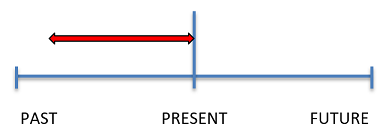
Present perfect is used to describe the past when it affects the present, for example

  • talking about past experiences
  • for something that began in the past and is still true
  • describing changes.

Using the Present Perfect Tense in  Business Situations

Situation 1:  Talking about Profits, Sales Results, and Work Experience.

Present perfect is used to talk about unfinished actions that started in the past and continue to the present.

In this case, you will find yourself using the present perfect when answering “how long” questions, and describing sales/costs/profits/revenues for a particular period until the present moment.

Examples:

I’ve worked here for five years.
Profits have increased by 10% since Mark has been the Brand Manager.
Sales have bounced back this month.
How long have you worked in the banking sector for?

Situation 2: Talking about Business Trips and Company situations.

Present perfect is used to talk about past experiences without saying when something happened in the past.

Examples:

Our company has been through some tough periods. Fortunately today, though, we’re thriving.
I’ve already been to Tokyo on business and I love the city and its’ people.

*Note: If you say when something happened in the past, use the past simple. For example, “I went to Tokyo on business in 2015.”

Situation 3: Talking about Recent Changes to Plans.

Present perfect to talk about a finished action (when something has recently happened) with a result in the present.

In this case, the second clause in the sentence often begins with “so” and then describes the result of the past action.

Examples:

Unfortunately, David has missed his connecting flight, so he can’t be here with us today.
I’ve lost the file with my presentation slides, so I’ll have to do them all again.

Situation 4: Talking about Clients and Sales.

Present perfect with unfinished time words or expressions. Typical unfinished time words and expressions include, “this week”, “this month”, “today.”

Examples:

I’ve visited three of our major clients this week.
How many units have we sold this month?

*Note: When you use past time words, such as, “yesterday”, “last week”, “last year”, you must use the past simple tense. For example, “Last month we sold 10,000 units.”

Situation 5: Talking about Durations of Job Positions and Lengths of Time with a Relation to the Present.

Present perfect is used to describe an unfinished action with ‘Since’ and ‘For’.

Use ‘since’ with a fixed time in the past (2015, 5th May, last year), and we use ‘for’ with a period of time (5 hours, six months, ten years,).

Examples:

We’ve been located here since 1990.
She’s been the HR Director since January.
I’ve known the client for 3 years.
He’s been the CEO for 6 months.

Situation 6: Talking about Recent News and Business Updates.

Present perfect is used to talk about something that happened recently.

Often used with “just “,”yet”, “already”, “recently.”

Examples:

The CEO has just quit.
I’ve already had my assessment with HR.
Have you got the sell-out results back yet?
Our stock price has surged recently.